Stablecoin payments. Easily accepted.
Stablecoin payments. Easily accepted.
Start accepting stablecoin and crypto payments with a platform you can depend on.

The easiest crypto payment solution
for eCommerce
The easiest crypto payment solution
for eCommerce

trezor

Crypto-security pioneer that engineered the original hardware wallet.
2+ million active users.

alza
The "Amazon" of Central Europe — the region's dominant eCommerce platform with over 5 million active users.
2024 turnover over $2.6B.
trezor
Crypto-security pioneer that engineered the original hardware wallet.
2+ million active users.
alza
The "Amazon" of Central Europe — the region's dominant eCommerce platform with over 5 million active users.
2024 turnover over $2.6B.
trezor
Crypto-security pioneer that engineered the original hardware wallet.
2+ million active users.
alza
The "Amazon" of Central Europe — the region's dominant eCommerce platform with over 5 million active users.
2024 turnover over $2.6B.
How to accept crypto in your online store
Payment gateway
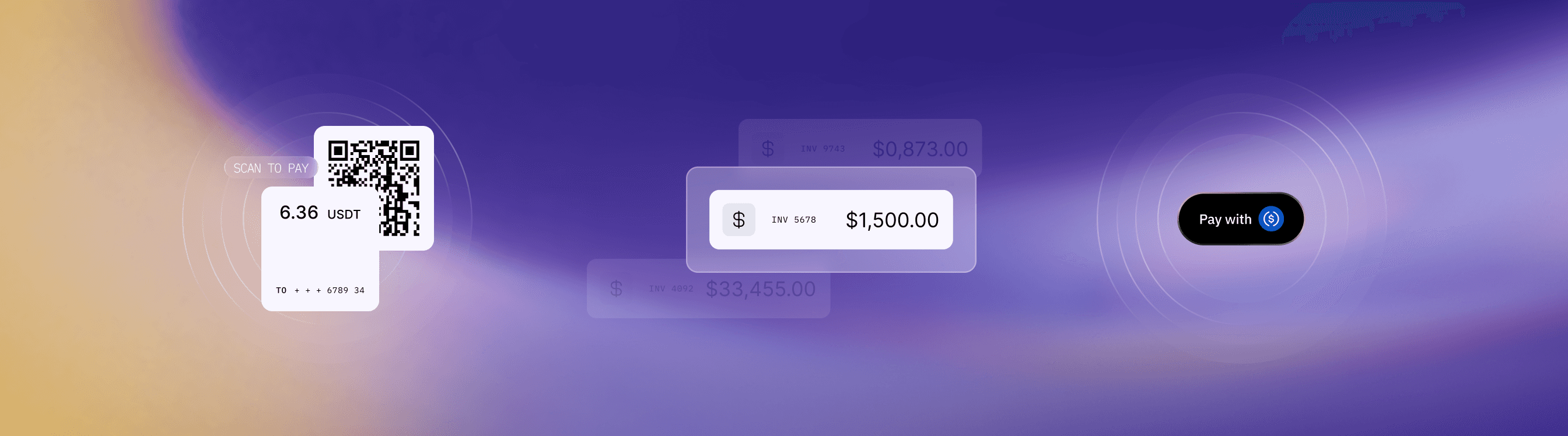
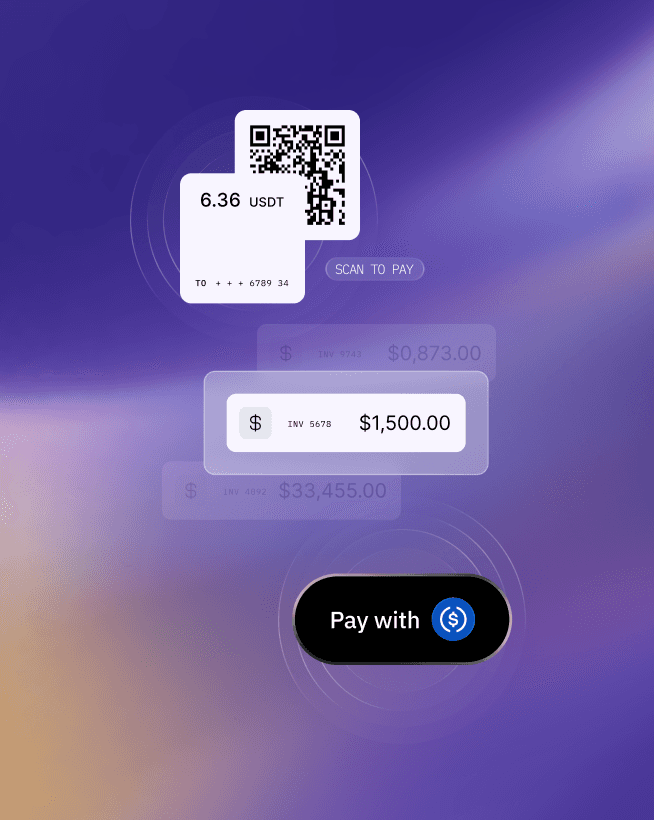
Enable your customers to pay with crypto as easily as with a credit card using our user-friendly API.

Email invoicing
Send email crypto invoices to your customers - no technical integration required.

Payment button
Add our ready-made HTML code for Donation and Payment buttons to your website in minutes.
Getting started with Confirmo
Getting started with Confirmo
Implement
Implement
Once you have selected the payment channel that best aligns with your business requirements, you can create an account and begin invoicing. For integration to our payment platform, please refer to our API documentation.
Receive
Receive
You can customize key parameters of your invoices, from supported digital assets to automatic conversion. This allows your customers to pay with crypto through several mechanisms (API, payment button, or email).
Exchange
Exchange
After accepting payments from your customers, you can convert into your preferred fiat or cryptocurrency. All funds are received to balances which you can conveniently manage in your Confirmo dashboard.
Withdraw
Withdraw
Easily withdraw funds and send to your bank account via settlements, which can be fully automated and recurring. You can also send mass crypto payouts to your selected number of wallets, simultaneously.
Getting started with Confirmo
Implement
Once you have selected the payment channel that best aligns with your business requirements, you can create an account and begin invoicing. For integration to our payment platform, please refer to our API documentation.
Receive
You can customize key parameters of your invoices, from supported digital assets to automatic conversion. This allows your customers to pay with crypto through several mechanisms (API, payment button, or email).
Exchange
After accepting payments from your customers, you can convert into your preferred fiat or cryptocurrency. All funds are received to balances which you can conveniently manage in your Confirmo dashboard.
Withdraw
Easily withdraw funds and send to your bank account via settlements, which can be fully automated and recurring. You can also send mass crypto payouts to your selected number of wallets, simultaneously.
[02]
Proven. Tested. Trusted.
Proven. Tested. Trusted.
With a decade of enabling companies to accept crypto payments, our products offer an all-in-one solution. As our software addresses your business needs, our support team ensures your experience is hassle-free.
Worldwide operations
Cryptocurrencies allow fast and cheap international payments. Focus on your business, not bank holidays and exorbitant transaction fees.
Compliance-led
We're one of the first CASPs to receive a MiCA license, making us the enterprise-ready, global platform you can rely on.
Security with integrity
With our enterprise-grade security measures, you can count on the safety and security of your funds.
Personalized support
Our customers (and their customers) trust us to get their issues resolved within 24 hours.
All the digital assets you need.
We support the top 10+ tokens, stablecoins, and blockchains.
USDT
Networks: Ethereum, Tron, Polygon, Arbitrum, Optimism, BNB Smart Chain
USDT is a crypto-asset issued by Tether and designed to reference the value of the U.S. dollar.
It is issued on multiple blockchain networks using different token standards.
According to the issuer, USDT is intended to maintain a 1:1 reference to USD, subject to reserve management and redemption mechanisms.
USDC
Networks: Ethereum, Polygon, Arbitrum, Optimism, BNB Smart Chain
USDC is a USD-referenced crypto-asset issued by Circle.
It is available on multiple blockchain networks and used in blockchain-based applications.
The issuer publishes information on reserve composition and third-party attestations.
BTC
Networks: Bitcoin, Lightning
Bitcoin is a crypto-asset introduced following the publication of a protocol in 2008 and the launch of the network in 2009.
It operates on a public, permissionless blockchain using a proof-of-work consensus mechanism.
The Lightning Network is a secondary protocol that enables off-chain transactions via payment channels.
ETH
Networks: Ethereum, Arbitrum, Optimism
Ethereum is a blockchain platform launched in 2015 that supports programmable transactions through smart contracts.
The network enables the deployment of decentralized applications by third parties.
Arbitrum and Optimism are Layer-2 networks that process transactions off the Ethereum mainnet while relying on it for settlement.
SOL
Networks: Solana
Solana is a blockchain network launched in 2020 and developed by Solana Labs.
It supports smart contracts and decentralized applications.
The network uses a distinct transaction processing and consensus design.
POL
Networks: Polygon
Polygon is a blockchain ecosystem providing scaling and interoperability solutions related to Ethereum.
The POL token is used within the network for transaction fees and other protocol-defined functions.
Polygon supports multiple blockchain architectures, including sidechains and Layer-2 solutions.
LTC
Networks: Litecoin
Litecoin is a blockchain network launched in 2011 as a modification of the Bitcoin protocol.
It differs from Bitcoin in certain technical parameters, including block time and hashing algorithm.
The network operates on a proof-of-work consensus mechanism.
TRX
Networks: Tron
Tron is a blockchain network launched in 2017 that supports smart contracts and token issuance.
The TRX token is used within the network for protocol-level functions, including resource allocation for transactions.
The network supports token transfers and decentralized applications.
All the digital assets you need.
We support the top 10+ tokens, stablecoins, and blockchains.
USDT
Networks: Ethereum, Tron, Polygon, Arbitrum, Optimism, BNB Smart Chain
USDT is a crypto-asset issued by Tether and designed to reference the value of the U.S. dollar.
It is issued on multiple blockchain networks using different token standards.
According to the issuer, USDT is intended to maintain a 1:1 reference to USD, subject to reserve management and redemption mechanisms.
USDC
Networks: Ethereum, Polygon, Arbitrum, Optimism, BNB Smart Chain
USDC is a USD-referenced crypto-asset issued by Circle.
It is available on multiple blockchain networks and used in blockchain-based applications.
The issuer publishes information on reserve composition and third-party attestations.
BTC
Networks: Bitcoin, Lightning
Bitcoin is a crypto-asset introduced following the publication of a protocol in 2008 and the launch of the network in 2009.
It operates on a public, permissionless blockchain using a proof-of-work consensus mechanism.
The Lightning Network is a secondary protocol that enables off-chain transactions via payment channels.
ETH
Networks: Ethereum, Arbitrum, Optimism
Ethereum is a blockchain platform launched in 2015 that supports programmable transactions through smart contracts.
The network enables the deployment of decentralized applications by third parties.
Arbitrum and Optimism are Layer-2 networks that process transactions off the Ethereum mainnet while relying on it for settlement.
SOL
Networks: Solana
Solana is a blockchain network launched in 2020 and developed by Solana Labs.
It supports smart contracts and decentralized applications.
The network uses a distinct transaction processing and consensus design.
POL
Networks: Polygon
Polygon is a blockchain ecosystem providing scaling and interoperability solutions related to Ethereum.
The POL token is used within the network for transaction fees and other protocol-defined functions.
Polygon supports multiple blockchain architectures, including sidechains and Layer-2 solutions.
LTC
Networks: Litecoin
Litecoin is a blockchain network launched in 2011 as a modification of the Bitcoin protocol.
It differs from Bitcoin in certain technical parameters, including block time and hashing algorithm.
The network operates on a proof-of-work consensus mechanism.
TRX
Networks: Tron
Tron is a blockchain network launched in 2017 that supports smart contracts and token issuance.
The TRX token is used within the network for protocol-level functions, including resource allocation for transactions.
The network supports token transfers and decentralized applications.
All the digital assets you need.
We support the top 10+ tokens, stablecoins, and blockchains.
USDT
Networks: Ethereum, Tron, Polygon, Arbitrum, Optimism, BNB Smart Chain
USDT is a crypto-asset issued by Tether and designed to reference the value of the U.S. dollar.
It is issued on multiple blockchain networks using different token standards.
USDC
Networks: Ethereum, Polygon, Arbitrum, Optimism, BNB Smart Chain
USDC is a USD-referenced crypto-asset issued by Circle.
It is available on multiple blockchain networks and used in blockchain-based applications.
BTC
Networks: Bitcoin, Lightning
Bitcoin is a crypto-asset introduced following the publication of a protocol in 2008 and the launch of the network in 2009.
It operates on a public, permissionless blockchain using a proof-of-work consensus mechanism.
The Lightning Network is a secondary protocol that enables off-chain transactions via payment channels.
ETH
Networks: Ethereum, Arbitrum, Optimism
Ethereum is a blockchain platform launched in 2015 that supports programmable transactions through smart contracts.
The network enables the deployment of decentralized applications by third parties.
Arbitrum and Optimism are L2 networks that process transactions off the ETH mainnet while relying on it for settlement.
SOL
Networks: Solana
Solana is a blockchain network launched in 2020 and developed by Solana Labs.
It supports smart contracts and decentralized applications.
The network uses a distinct transaction processing and consensus design.
POL
Networks: Polygon
Polygon is a blockchain ecosystem providing scaling and interoperability solutions related to Ethereum.
The POL token is used within the network for transaction fees and other protocol-defined functions.
Polygon supports multiple blockchain architectures, including sidechains and Layer-2 solutions.
LTC
Networks: Litecoin
Litecoin is a blockchain network launched in 2011 as a modification of the Bitcoin protocol.
It differs from Bitcoin in certain technical parameters, including block time and hashing algorithm.
TRX
Networks: Tron
Tron is a blockchain network launched in 2017 that supports smart contracts and token issuance.
The TRX token is used within the network for protocol-level functions, including resource allocation for transactions.
All the digital assets you need.
We support the top 10+ tokens, stablecoins, and blockchains.
USDT
Networks: Ethereum, Tron, Polygon, Arbitrum, Optimism, BNB Smart Chain
USDT is a crypto-asset issued by Tether and designed to reference the value of the U.S. dollar.
It is issued on multiple blockchain networks using different token standards.
According to the issuer, USDT is intended to maintain a 1:1 reference to USD, subject to reserve management and redemption mechanisms.
USDC
Networks: Ethereum, Polygon, Arbitrum, Optimism, BNB Smart Chain
USDC is a USD-referenced crypto-asset issued by Circle.
It is available on multiple blockchain networks and used in blockchain-based applications.
The issuer publishes information on reserve composition and third-party attestations.
BTC
Networks: Bitcoin, Lightning
Bitcoin is a crypto-asset introduced following the publication of a protocol in 2008 and the launch of the network in 2009.
It operates on a public, permissionless blockchain using a proof-of-work consensus mechanism.
The Lightning Network is a secondary protocol that enables off-chain transactions via payment channels.
ETH
Networks: Ethereum, Arbitrum, Optimism
Ethereum is a blockchain platform launched in 2015 that supports programmable transactions through smart contracts.
The network enables the deployment of decentralized applications by third parties.
Arbitrum and Optimism are Layer-2 networks that process transactions off the Ethereum mainnet while relying on it for settlement.
SOL
Networks: Solana
Solana is a blockchain network launched in 2020 and developed by Solana Labs.
It supports smart contracts and decentralized applications.
The network uses a distinct transaction processing and consensus design.
POL
Networks: Polygon
Polygon is a blockchain ecosystem providing scaling and interoperability solutions related to Ethereum.
The POL token is used within the network for transaction fees and other protocol-defined functions.
Polygon supports multiple blockchain architectures, including sidechains and Layer-2 solutions.
LTC
Networks: Litecoin
Litecoin is a blockchain network launched in 2011 as a modification of the Bitcoin protocol.
It differs from Bitcoin in certain technical parameters, including block time and hashing algorithm.
The network operates on a proof-of-work consensus mechanism.
TRX
Networks: Tron
Tron is a blockchain network launched in 2017 that supports smart contracts and token issuance.
The TRX token is used within the network for protocol-level functions, including resource allocation for transactions.
The network supports token transfers and decentralized applications.
FAQs
Frequently asked questions
Why should online stores accept crypto?
Why should online stores accept crypto?
Why should online stores accept crypto?
How does Confirmo handle crypto volatility?
How does Confirmo handle crypto volatility?
How does Confirmo handle crypto volatility?
Can crypto payments increase traffic and income?
Can crypto payments increase traffic and income?
Can crypto payments increase traffic and income?
How do refunds work with confirmo?
How do refunds work with confirmo?
How do refunds work with confirmo?
How demanding is integrating Confirmo into an e-shop?
How demanding is integrating Confirmo into an e-shop?
How demanding is integrating Confirmo into an e-shop?
What customer support does Confirmo offer?
What customer support does Confirmo offer?
What customer support does Confirmo offer?

Let's make money move.